–By J.S. Porter
for Cheryl and our dogs
Cheryl and I have led a six-dog life so far in our marriage:
Jet, a black Lab, then three Golden retrievers—Sandy, Molson, Marley (after one Bob)—a Flat-coated retriever, Dylan (after another Bob) and Sophia, another black Lab. Each unique and unforgettable.
We have strong emotions attached to each dog – how Jet overcame a skidoo running over him that dented his head; how Sandy broke through a screen door to run to the shoreline of Mirage Lake and swim across the lake to be with us in a canoe; how Cheryl ran daily with Molson by her side to rebuild his muscles from an operation that went awry; how Marley belly-crawled protectively alongside our daughter’s nervous cat in his first exposure to the outdoors; how Dylan rested his head on my feet as I read or wrote; how Sophia broke from her lease and chased a young fox at a blinding speed across an open field into a wooded area.
Dogs. So much to learn. Eat what you like best first. Don’t delay or put things off until tomorrow. If you see a squirrel, chase it now. Greet strangers you like with licks and tail-wagging. Live in the moment. Be present wherever you are or with whom you’re in company. Smile more than growl. Show affection. Be open and honest. Have fun.
Dogs. French critic Hélène Cixous has never wanted to own one. She accurately says, “A dog is a threat. What is threatening about dogs is their terrible love…This infinite, complete, and limitless giving of love is exhausting for a human being…Such limitless love doesn’t fit our economy.” French novelist Anatole France once wrote, “Until one has loved an animal, a part of one’s soul remains unawakened.”
Parts of my soul come awake in the presence of a dog, come alive in the presence of my Sophia, whom our daughter calls “the most.” You can add any modifier you like—the most trouble, the most disobedient, the most loving. (She had a lousy trainer!) She gives her best (presence, affection, devotion) and receives my best (tenderness, exercise, care). I admire her high spirits, her playfulness, her stoicism in pain, her enormously broad pack, both canine and human – how she takes the world in by her nostrils and licks it into friendship.
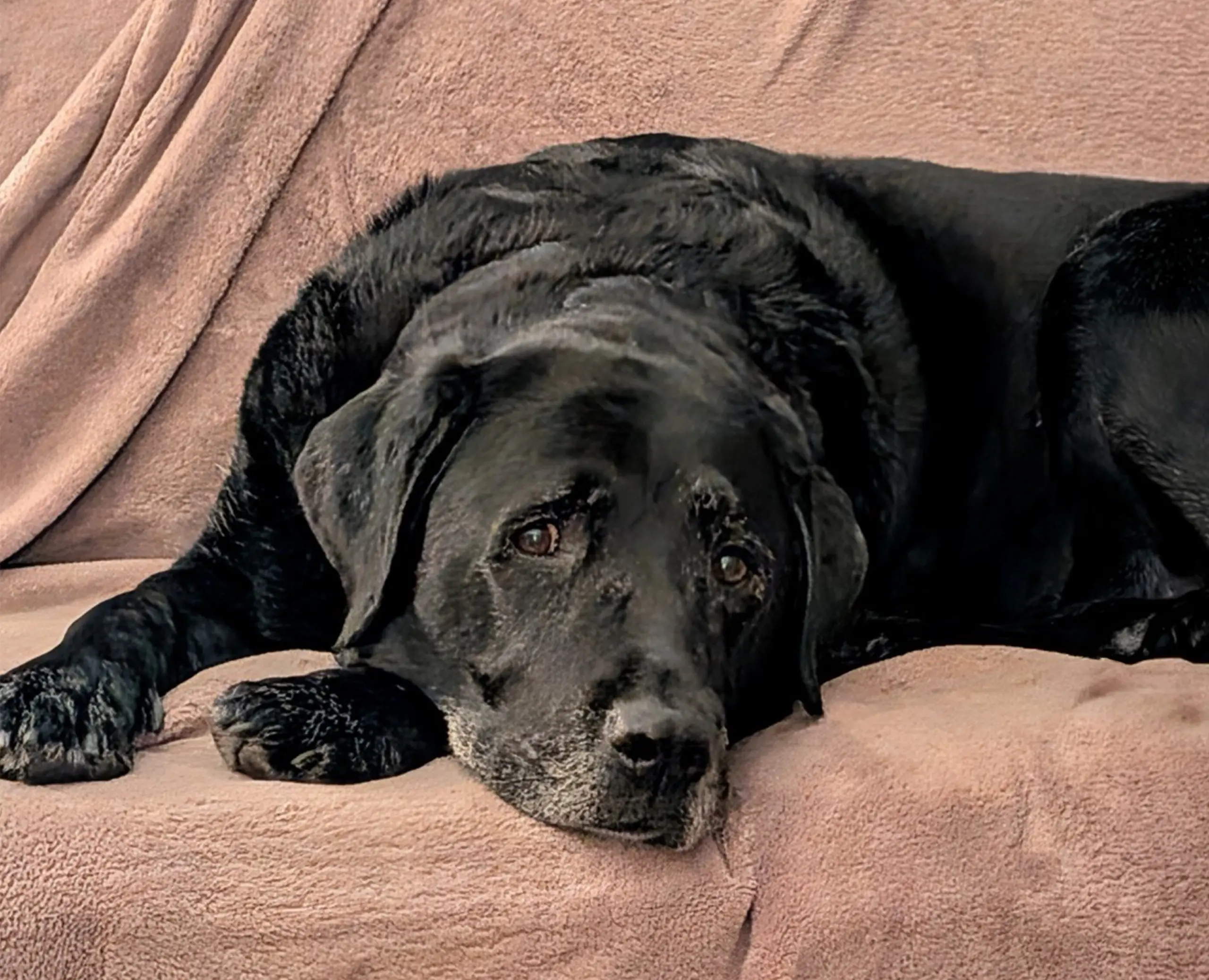
Dogs are entwined with Cheryl’s and my life. We’ve shared moments of joy, even ecstasy, and moments of sadness when our dog’s accelerated life comes to an end. If, as Shakespeare says, human beings have seven stages, dogs have about three: the young years when they’re full of rambunctious energy, the middle years when they chill out a little, and the late years when they slow down, go on sniff walks as opposed to brisk walks. When I look at my son’s photograph of Sophia, I’m mindful that she will be our last dog. Whether you have two legs or four, time beats you up.
Dogs are embedded in literature right from the start. Go back to that archetypal dog Argos in Homer’s The Odyssey, 8th. century BC. Argos waits 20 years for Odysseus to return from his adventures, is the first to recognize him, and dies trying to crawl to him.
Writers and poets have long celebrated dogs and their inspiring presence. Hemingway, for instance, who once said that he couldn’t write without the presence of Black Dog, had marked graves for all his deceased dogs on the grounds of the Finca Vigia, his Cuban home. Emily Dickinson, in a wave of her magical wand, once wrote in a poem, “Tell Carlo–/He’ll tell me.” If you had something of worth to say to Dickinson, you had to go through her dog first.
In a recent work of doglore, Canadian writer Helen Humphreys pens a beautiful dog story: And a Dog Called Fig: Solitude, Connection, the Writing Life (2022). It belongs on the shelf with Mark Doty’s The Dog Years, Mary Oliver’s Dog Songs and Alicia Ostriker’s The Old Woman, the Tulip, and the Dog. My friend Kelly recommended Fig to me on one of our dog walks. I was slow to pick it up, but am very glad I did. A host of great writers (including Virginia Woolf, Emily Dickinson, Isak Dinesen, Agatha Christie, Gertrude Stein and Mary Oliver) and their loyal companions introduce themselves in Humphreys’ well-crafted, zesty pages. The most revered dog is, of course, Humphreys’ own, a vizsla named Fig.
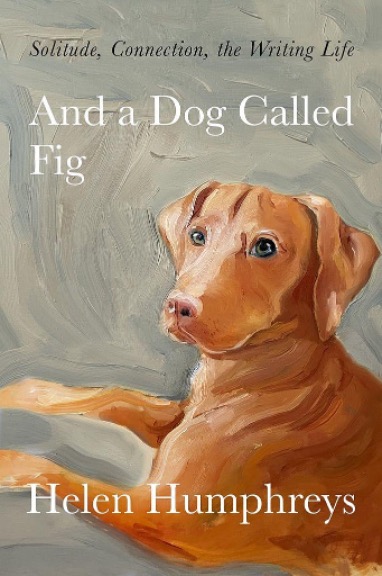
Humphreys, a novelist by trade, has a keen biographical nose for details concerning writers and their dogs:
“Life for Woolf was a morning of writing and an afternoon of walking with a dog, a routine she maintained for most of her life, and which I have followed for most of mine.” One of the dogs, who accompanied her on walks, was Grizzle, a mixed-breed terrier.
“Emily Dickinson was given her Newfoundland dog, Carlo, by her father, to be a companion for her on her rambles through the woods and fields around their home in Amherst, Massachusetts.” Carlo nuzzles into several of her poems.
“There is a bronze statue of Brom and Khina [dachshunds] outside the former Chekhov house in Moscow. Visitors to the house rub the noses of the bronze dogs for luck. The noses have been rubbed so often that they are highly polished.” (Reminds me of the Richard Gere movie “Hachi” in which the Japanese government commissions a statue outside a Tokyo subway station to honour the steadfast devotion of an Akita to its owner.)
Small in stature, English poet Alexander Pope bought a Great Dane for protection in the crime-ridden London of the 18th. century. “He called the female dog Bounce, and every day he went out with the dog and two loaded pistols into the streets of the city. Bounce protected him outside and inside his home, once attacking and subduing a male servant who was attempting to kill and rob Pope.”
Can you write without a dog in the house? Of course. Would you want to? Of course not. Your life is richer by the presence of another sentient being, a significant other whose gentleness and affection grace your life in countless ways.