–By J.S. Porter
for Cheryl
For me, spring means daffodils, crocuses and the Toronto Blue Jays.
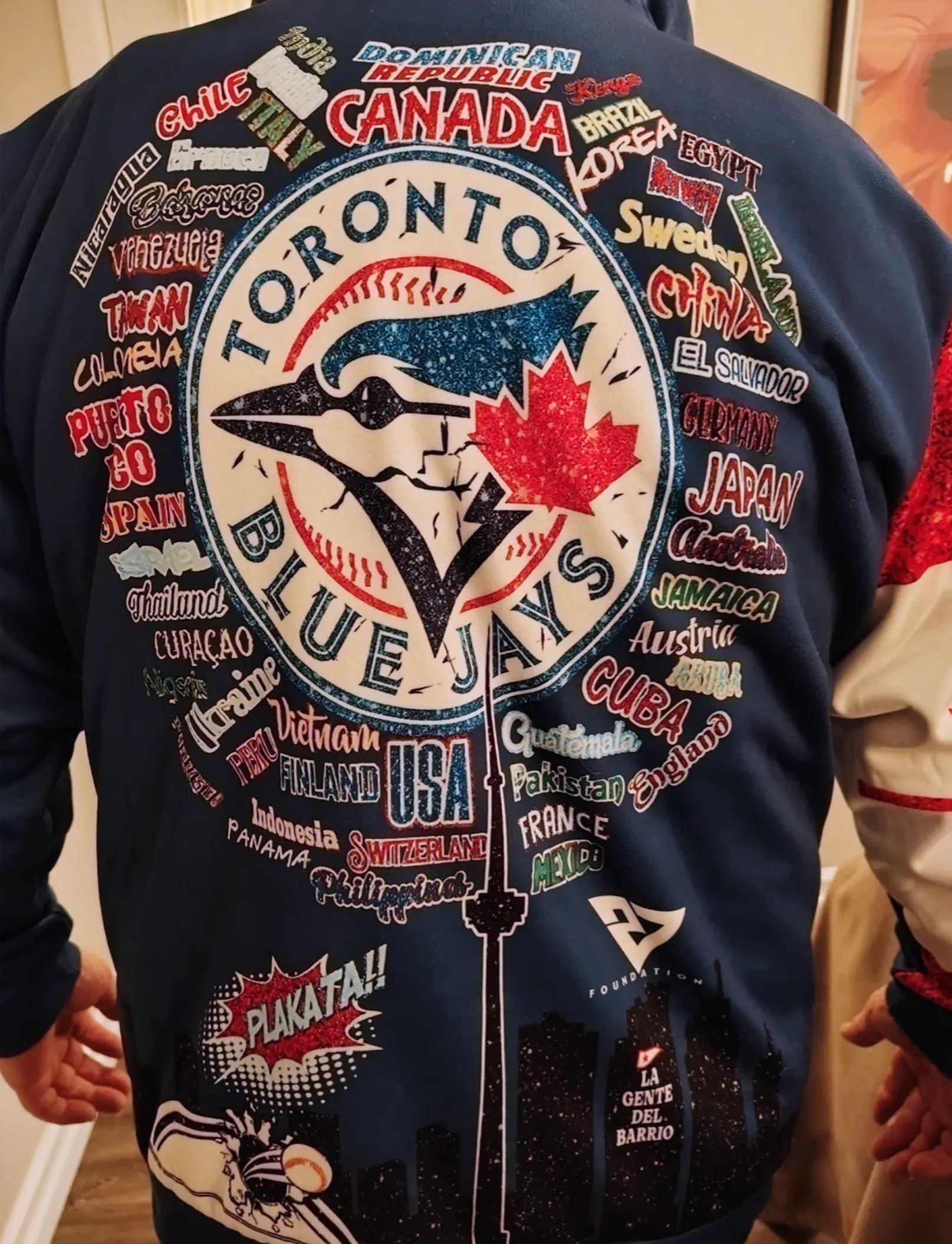
My wife and I don’t miss a game on television. She dresses up in a Blue Jays T-shirt with her favourite name and number on the back, Springer, Number 4. (Who can forget his three-run homer in last year’s American League Championship against Seattle and his jumping for joy like an eight-year-old?). I sometimes wear my Jays hoodie that Cheryl ordered for me and snack on peanuts as if I had a seat at the Sky Dome (prefer that name, more magical, to the renamed money-vacuuming Rogers Centre).
When I wear the hoodie, it feels like I’m carrying Canada on my back, Toronto on my back, many of the world’s countries, from Japan to the Dominican Republic, on my back. In Canada’s love-hate relationship with Toronto, love wins out, coast to coast to coast, when it comes to the Blue Jays.
There are some new players in the 2026 version of the team: new pitching acquisitions and a Japanese third baseman named Okamoto, but it’s the old players we watch for –the Buffalo boys (Barger, Schneider, Clement), Varsho. Lucas, Giménez, Kirk, Heineman, Valdy and Springer, the Cheech and Chong of baseball, who make commercials together, and Mad Max.
Bo is gone, one of the great hitters in the game, but accident-prone. Pitcher Bassitt, as much a scientist of the game as a player, is gone. But Cheryl and I still faithfully attend the Church of Baseball, our summer religion. A sidebar from Mark Kingwell: “Baseball is not a religion, but it sure feels like one sometimes. The rituals, the costumes, the incantations. The narratives of sacrifice and redemption.”
Baseball writer and philosopher Mark Kingwell regards the sport as a combination of mathematics (he prefers the word “geometry”) and poetry. I don’t personally care much for the mathematics: the averages, the percentages, the measurements, but I adore the poetry – the unexpected, the quiet, the explosiveness. George Bowering: “The pacing of the game — nice and slow and easy, punctuated with flashes of magic and excitement — is like poetry.”
Marshall McLuhan, our all-knowing guru whom Kingwell quotes, says that baseball is a game about timing and waiting, “the entire field in suspense waiting upon the performance of a single player.” You time your swing against the velocity of the ball; you wait for things to happen– a bunt, a foul, a line-drive, a pop-up, a home run. For the longest time, nothing seems to happen, then everything does. I appreciate McLuhan’s words, but mostly Cheryl and I reflect wistfully on last season.
We won’t see again in our lifetime such a motley crew of ball players. The squat rotund Mexican who needed a double to get to first base, a limping Bo who doesn’t allow himself visible emotion and gives everything he’s got in every swing he takes, the broken busted Springer who refused to quit, the Dominican boy from Montreal who played first base like a master, Giménez the perfect bunter, Ernie who played with the joy of a young boy surprised that he could still surprise his mother in the stands, Lucas abandoned on the island of the minor leagues finding his worth and making every at bat and every catch count, Varsho who would risk his bones, his life, to make a catch, Bam Bam Barger whose excitement to play engendered your excitement to watch, and then there is Mad Max at the near end of his illustrious career still believing and making us believe, Bassitt who would do anything his manager asked him to do, and the Kid with the improbable name, Yesavage, who dropped from another planet, fearless, who moved from lot ball, to college ball to the majors with his CN Tower delivery, each pitch straight and true.
Our hearts were broken in 2025; the LA Dodgers won, and the Toronto Blue Jays lost. Such a noble effort, such a painful loss. But as Kingwell and others say, baseball is a game about failure. Even the best hitters miss more than they hit.
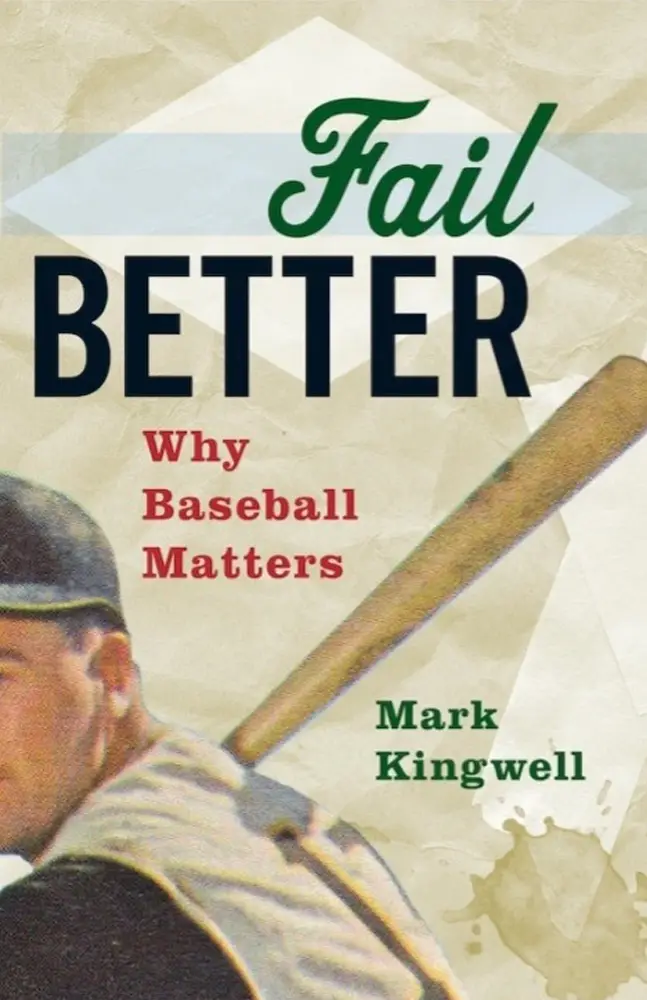
Baseball seems to bring out the poet in people. I can’t think of another sport that has had more great writing bestowed upon it. Think of Don DeLillo’s opening chapters in Underworld, baseball poets Donald Hall, George Bowering and John Updike, Bernard Malamud’s The Natural, W.P. Kinsella’s Shoeless Joe, the inspiration behind the movie “Field of Dreams,” and Mark Kingwell’s Fail Better: Why Baseball Matters.
Kingwell steals his title from Samuel Beckett: “All of old. Nothing else ever. Ever tried. Ever failed. No matter. Try again. Fail again. Fail better.” Beauty and poetry may be at the heart of baseball, but so too is failure. I can speak from experience here. I was a lousy baseball player, a complete failure. I was always afraid: afraid the ball would hit me while batting, afraid it would fall on me while fielding. My son and grandsons, on the other hand, are all good ballplayers, even though they, like baseball players everywhere, fail more than they succeed.
At its simplest, baseball is a game about hurling a ball with movement and spin at high speeds and a hitter trying to get on base with a walk or a hit or, in rare moments, like Joe Carter’s World Series walk-off in 1993, a home run.
Two questions remain for Cheryl and me. Can the Jays go deep again into October this year? Does Jumpin’ George Springer have more great swings in him? Cheryl and I will be watching.
P.S. The two most beautiful word-feasts on the beauty and poetry of baseball for me are the words of former commissioner A. Bartlett Giamatti, a Yale professor of Renaissance Literature in English, and the words of John Updike on Ted Williams last at bat.
Kingwell draws the reader’s attention to both sets of words, although he forgets to mention Updike’s great poem simply entitled “Baseball.”