–By J.S. Porter
For Wendy Pearson: reader, musician and friend
“Since music is the only language with the contradictory attributes of being intelligible and untranslatable, the musical creator is a being comparable to the gods, and music itself the supreme mystery of the science of man.”
–Claude Levi-Strauss
I grew up with classical music. My father played it on our stereo system constantly, in moments of joy, in moments of stress. He listened to music while lying flat on his back in our living room with his eyes closed or sitting comfortably in his armchair daydreaming. I don’t know how this working-class boy from Belfast discovered a love of classical music. It’s a mystery to me. The gift came to him, but I don’t know who the giver was.
Beethoven, Brahms, Schubert, Wagner, and Mozart were auditory companions of my youth. Not rebellious by nature, and generally accepting of Dad’s many gifts, particularly in the realm of books and ideas, I stubbornly resisted his subtle attempts at instilling a love of classical music. I chose Bob Dylan over Mozart.
That choice epitomized our musical divide, just as years later, when I became a father, my son and I parted musical company over his embrace of Metallica and Heavy Metal, Nirvana and Punk, despite my urgings to open his ears to the growls of Dylan. He listened to Pearl Jam and the Red Hot Chili Peppers as well, both of which have done Dylan covers, so maybe the divide was not so wide after all. Plus, my son has Grade Eight piano and not only appreciates Bach but can actually play some of his compositions on the piano.
For the longest time, I seemed to abandon classical music altogether, turning to Jazz and Folk instead, though not entirely. Years ago, I was driving to the town of Dundas (probably on my way to a bookstore) when the CBC was playing the Estonian composer Arvo Pärt’s Spiegel im Spiegel, piano and violin, a few simple notes repeated in a pattern. I found emotion welling up in me. I had to pull over to the side of the road. I was crying.
Then, years later, my wife and I read that Leonard Cohen’s favourite piece of music was the Spanish composer Joaquin Rodrigo’s The Concierto de Aranjuez, a concerto for classical guitar. Cohen was, and is, my wife’s favourite folk singer and poet. When he recommends something, she takes the recommendation seriously. She fell in love with the concerto’s rise and fall, its quiet and ecstatic orchestral uplift which re-energizes the minimalism of the guitar.
As a gesture to acknowledge her passion for Rodrigo, I attempted to write a poem about the musical composition and failed, of course. It’s difficult to apply words to a medium not built on words.
The light withdraws
the tide recedes
despair

The light returns
the tide advances
joy

In the waterlight
another music
mostly guitar
builds
and quietly
crests
under the magisterial sweep
of orchestral sound

The music is your mother
disappearing
unexpectedly returning
Fast forward to now… I’m in a church, The Church of the Ascension, off John Street in Hamilton, and I’m listening immersively – I could touch the cellist beside me, the violinist in front of me and the bass behind me—to Polish composer Górecki’s Symphony of Sorrowful Songs with the National Academy Orchestra of Canada under the guidance of conductor Tania Miller, accompanied by soprano McKenzie Warriner. The performance is part of the Boris Brott Summer Music Festival. I’m alone. Cheryl didn’t want to join me for fear that the sadness would be overwhelming. She drops me off at the church and picks me up when the concert is over.
The odd thing is, the music is not overly sorrowful. The human voice doesn’t allow one to dwell too long in sorrow. The piece ebbs and flows, ascends and descends and ascends again. It is meditative—my eyes are shut for the most part—and strangely exhilarating. I’m thinking about my father as I listen, how he would have wanted to be there, how he’d want to speak to the musicians, how he’d want to congratulate the conductor and the soprano soloist.
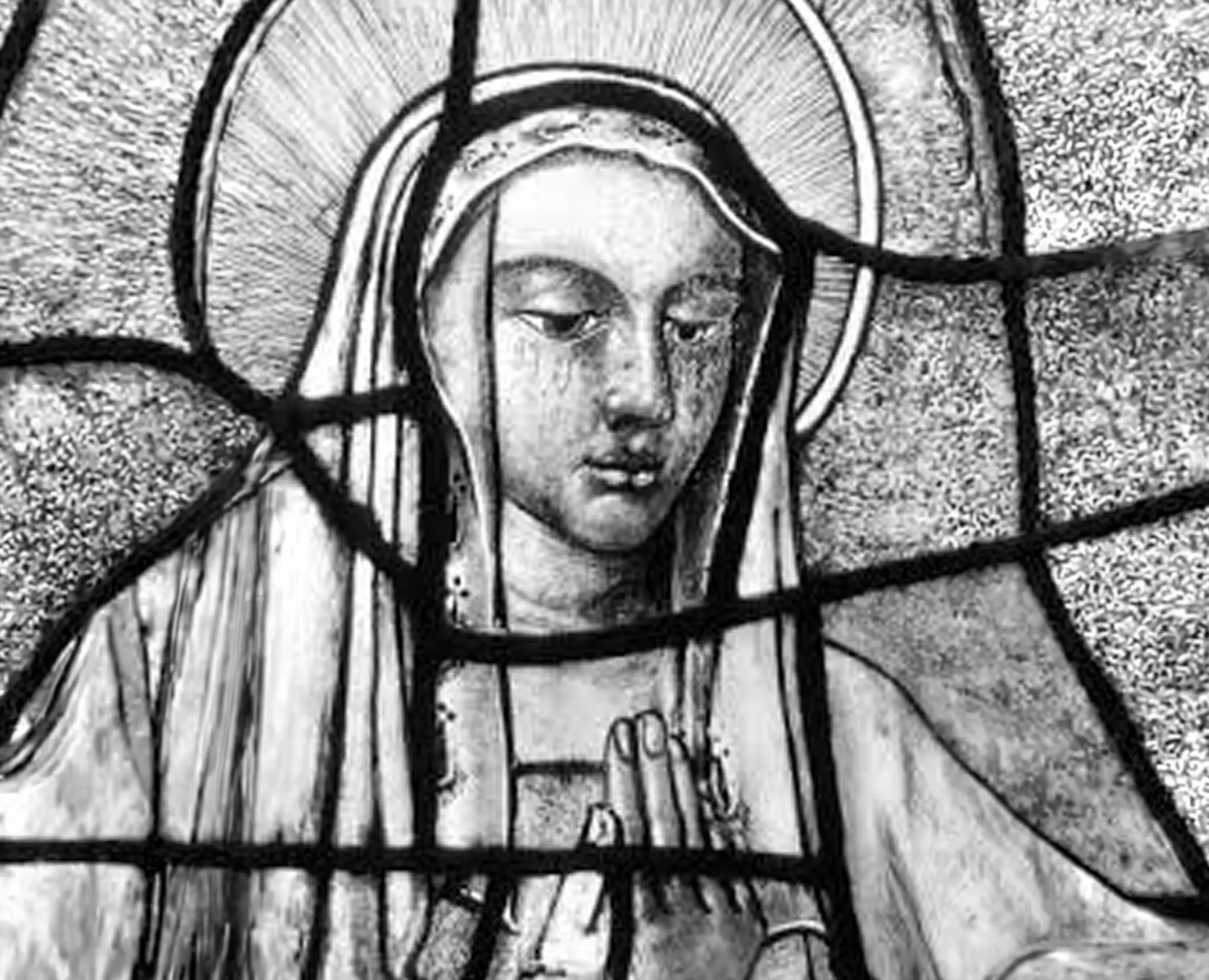
At the centre of Górecki’s composition are the mother and child, how a mother has lost a child (Mary and Jesus, “O my son, beloved and chosen, Share your wounds with your mother …”), how a mother is looking for a child in the Silesian uprisings (“Where has he gone, my dear young son?”), how a child writes “Oh, Mamma do not cry…” on the wall of a Gestapo cell. These thoughts also bring my father to mind. Throughout his life, he revered the mother-child relationship and the feminine principle of tenderness and love, which he believed were vitally important for both men and women. It was his abiding principle, along with the word “more.” See more, do more, live more, experience more, be more.
In my youth, Dad gave me Shakespeare and Wordsworth, Keats and Blake, and provided a role model of openness to life’s blessings and gratitude for them. In my senior years now, Dad is giving me music, and I am finally open to receiving the gift.