–By J.S. Porter
for my dog-walking, baseball-loving friend, Kelly
In art and dream, may you proceed with abandon
Patti Smith, “To The Reader,” Introduction to Early Work
In life, may you proceed with balance and stealth
I’m in love with Patti Smith and the intimacy of her voice in Just Kids, M. Train, and Devotion. She looks like the Ancient of Days, but she writes with the freshness of the First Morning of Creation. What she reads leaks into what she writes. She recognizes no border between poetry and prose. Her spiritbookword is devout-memory. Her tribute to her friend, Sam Shepard, in The New Yorker is very beautiful.
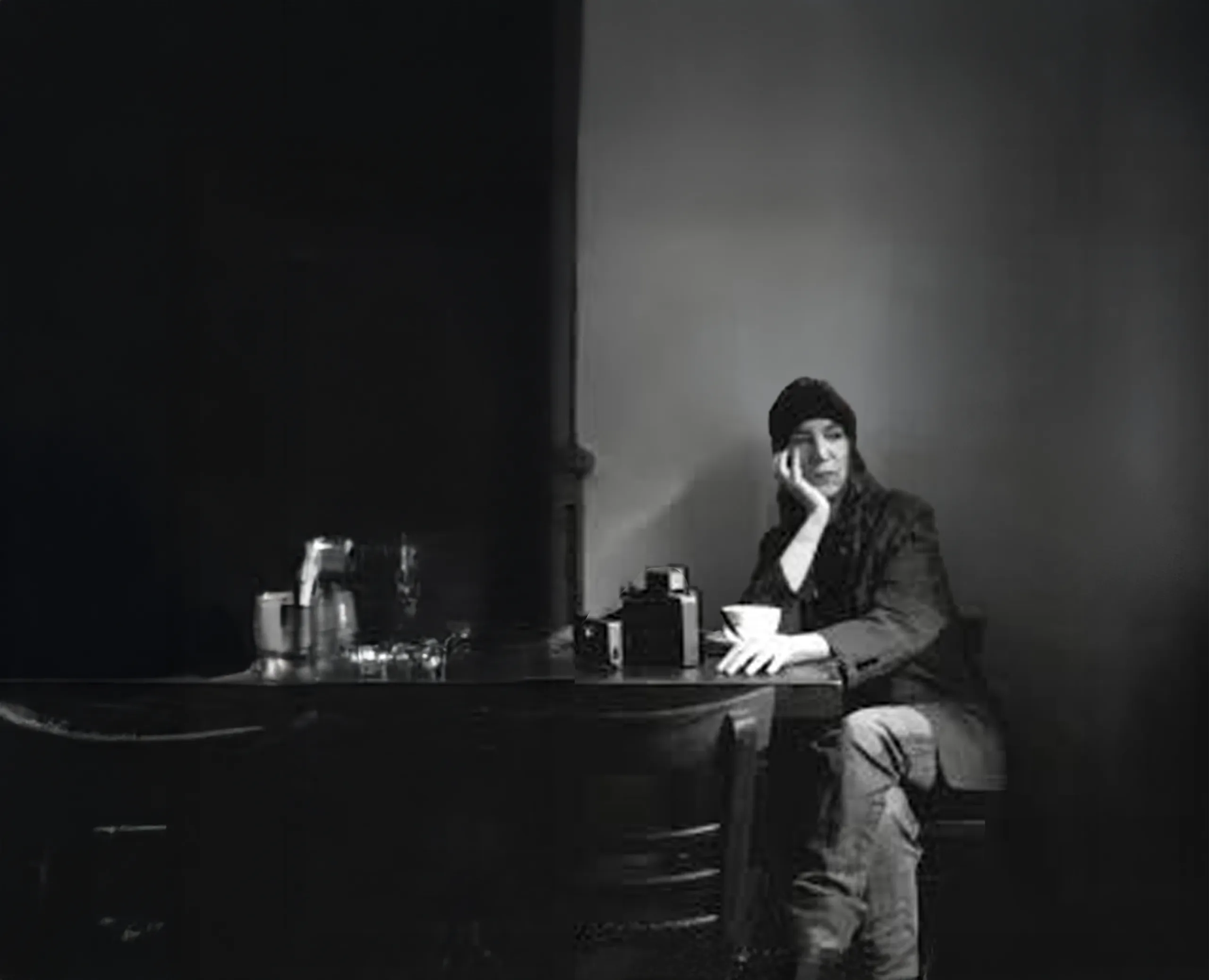
- She seeks out coffee shops. Finds the right one. Returns and returns. Coffee and a notebook. Coffee and her Polaroid. You never know who might come to the window or through the door.
- I went to her photography exhibit at the Art Gallery of Ontario in Toronto in the winter of 2013. Small photos, personal, intimate. Grave sites, often artists. Interiors. Beds of artists. Where artists sleep and where they die are important things to know.
- Listen to her sing Dylan’s “A Hard Rain’s Gonna Fall” at the ceremony for his Nobel Prize in literature. She stumbles midway through. Stops. Asks the orchestra if she can begin again. She begins again.
- When “The Killing” goes off the air after three seasons, she protests. The show comes back for a fourth season. She plays a doctor in one of the final episodes. Her face looks like too much has happened to it. Too much life has blown across it, into it.
- This year marks the publication of Patti Smith’s new memoir, Bread of Angels. Her magic, whether in photography, poetry or prose, lies in making the distant near: “[On Bob Dylan]…we sang the chorus together on the same microphone, our faces nearly touching. I could see tiny beads of sweat on his forehead and caught the intensity of his eyes.”
A necrophiliac of the familial dead and
the artistic dead. Reader of Blake and Rimbaud,
Bolaño and Murakami. Mourner with a
sense of humour. What else can you do,
when you lose a lover, a brother, a friend, and
a husband but weep and sometimes laugh—
garland them with words, make memory speak.
Kiss them into life with Polaroid photographs
and graveside eulogies. Princess of the Shrouds,
Our Lady of Dreams, coffee, books and doodles,
and detective shows; hush, she’s in love with
detective Linden.

Maker of words – some sung, some stripped into
poetry or whittled into prose. Conjuror of lost objects,
lost people, lost places. Mood: melancholia,
which she turns in her hand as if it were a small planet.
An Ethiopian cross around her neck, she believes
In everlasting Resurrections. Ace of Swords –
mental force and fortitude, she’d fly if gravity loosened.
Lives in hotels, greets strangers, makes lists,
fills notebooks and journals, forages memory,
looks for a good coffee shop— the right book.

*Italicized words are from Patti Smith’s M. Train.
Poet. Visionary. Warrior. Boundless energy. Godmother of punk rock. A sense of urgency. The sort of urgency you hear in Jack Kerouac and Hemingway, where now is the most important word in the language.
Her voice: lullabies for babies mashed with Shakespearean storms and sword fights. Harsh, screaming, full-frontal assault and then soft, gentle, nursing your wounds just after opening them. Body in constant motion, a seizure, a fit, prowling on stage, skulking, sulking, roaring, raging, then come the whispers and the prayers. The New York Times celebrated the 50th anniversary of her breakout album “Horses” with these words: “Sex. Death. Divinity. Violence. Grief. Money. Family. Art. Defiance. Ecstasy. Transfiguration. Dancing. Destruction. Rock’ n roll conjoined to singular visions.”
Bono says this in the New York Times (November, 7, 2025) about Patti Smith and “Horses”:
“Back then, I couldn’t believe that she could take an early rock ’n’ soul classic like Van Morrison’s “Gloria” (national anthem in Ireland!) and dare to reimagine, reboot and refloat it as salacious stalking fire breathing punk prayer, smudging the lines between the sexual and the spiritual. In a certain sense this album offered me as a singer and the band a manifesto for how I will go about the next 49 years.”
She sings, she dances, she takes pictures, she writes songs and poems, she writes heartbreaking sentences like these about photographer Robert Mapplethorpe in Just Kids: “We gathered our colored pencils and sheets of paper and drew like wild, feral children into the night, until, exhausted, we fell into bed. We lay in each other’s arms, still awkward but happy, exchanging breathless kisses into sleep.”