–By J.S. Porter
(Celebrating National Poetry Month)
for my friend, Susan McCaslin
I wrote this sentence some years ago:
“Mystery, strangeness, the bliss of not-knowing, don’t know if I’m in a poem, a story, or a song.”
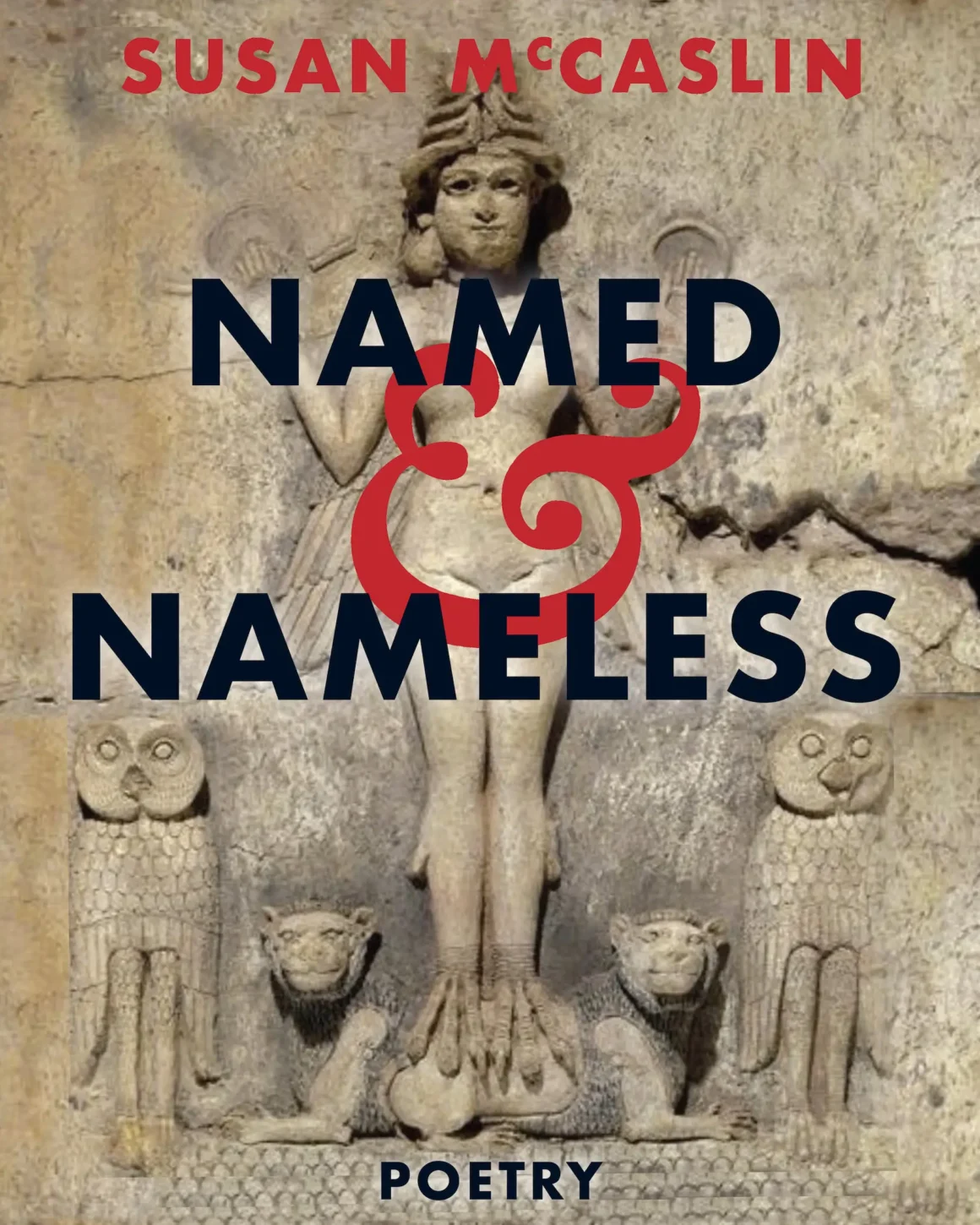
My poet-friend Susan McCaslin placed my sentence in her book Named & Nameless, published by Inanna in 2025, as an epigraph in the poem “Lost Locations.” She sent a copy of the book to me. It came as a thrilling surprise.
The sentence has a history. Originally, it appeared in a draft for my prose poem “How to Read Harper’s Magazine May 2018 with the Retractable Tongue of a Snake.”
Then I decided to delete it.
Two years later, I put the sentence about my lostness and not-knowing into a poem entitled “Scratches.”
Scratches
Supreme form of the sacred: the mark and the void. Roland Barthes
As a child, Robert Lax scratches a stone with another stone,
puts the scratched stone back in the stone-heap, knowing that someone will see it and know that he has made a mark.
Later, Lax marks with words:
...a word as a single
(arp-like image)
alone on a page

(an object of contemplation)*
Lax’s friend Thomas Merton makes marks (poems, translations, journal jottings) on paper and makes marks by other means (drawing, photography, calligraphy).
So what are my scratches?
One word: spiritbookword.
One sentence: Mystery, strangeness, the bliss of not-knowing, don’t know if I’m in a poem, a story, or a song.
One thought: The desire to write something so strange to myself that I don’t recognize it as mine.
*Lines from Robert Lax’s letter to Susan Howe in 1975, quoted in Paul J. Spaeth’s Introduction to A Thing That Is: New Poems by Robert Lax, p. 14. An earlier version of “Scratches” was published in The Merton Seasonal, Spring 2019.
Lines, sentences: they appear, disappear, reappear.
Susan has a poem, “Poem Found on Morning Pillow,” in her Named & Nameless that gently nests in my mind. Its concluding lines sound and resound, “another’s otherness/that is your own.”
You could build a life around these lines. You could change your life and reorient its direction. Instead of self and the other, you have self and self. There is no other. The blood flowing in your veins is the same blood flowing in the person who shares your pillow.
There lurks in Susan’s poem mystery, strangeness, and the bliss of knowing. Words in whatever form–poem, story or song–are from the same language. People, in whatever manifestation, are of the same heritage and share the same destiny.
Here’s Susan’s beautiful little poem in its entirety. I’m very grateful for its enlightening charge and very grateful to its author, one of Canada’s most far-seeing and deep-seeing poets.
Poem Found on Morning Pillow

sometimes
script changes

and you know
you know

when you come upon
just the right difference

another's otherness
that is your own